It is not about throwing money at the problem, which may be a good start, but it is about changing the fundamental values of Americans and the way that they engage with relationships with each other. This is a multi-component problem that is made up of relationship between individuals within these lower socio-economic groups as well as the way that the rest of the American population relates and interacts with these groups.

Despite the fact that we live in a limited democracy, I feel that the government still represents sentiments of the people and that it will get away with serving the needs of one group at the cost of another if it can get away with it. Kozol is doing some good in that he is his calling for the government to be held accountable for its decisions, a central tenet to a democracy, but at some point the people who elected these officials need to be held accountable for themselves and their viewpoints and it is this area that Kozol avoids. Wal-mart is a pertinent example, instead of just deriding Wal-Mart for its poor practices, we also hold the people that economically support it and therefore its practices accountable as well.
Historically, human reaction to other humans that they would consider enemies has been dehumanization. By making these other individuals devoid of any characteristics that they may empathize with, they can commit (or allow) the many atrocities that dot the landscape of human history.
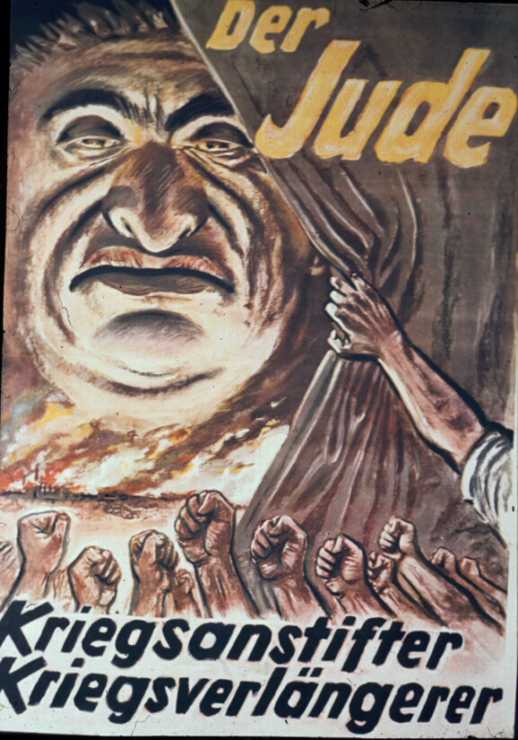
In America today, a similar occurrence that is likely a remnant of America's twisted version of chivalry where white men had to protect white women from the animal nature of the black man, has happened or I should say has continued and extended beyond racial borders to encompass a broad socio-economic group, poor people are dangerous in America.
 |
| These people are dangerous!!!!! |
With the growing gap between rich and poor, an increase gap in the reliability of the haves and have-nots has broken down further, perhaps even to the point of royalty vs. peasantry. A primary reason that the injustices that Kozol describes continue is this rift in society where somehow poor people's lives are worth less than those with all the money. The social factors that have contributed to the this extend far beyond scope of this discussion could easily likely require a book (which I am by no means qualified to write). My next piece is that rich/white people are often so quick to engage that guilt complex that is seemingly becoming more and more standard in today's population. I would posit that this reaction occurs so swiftly that it completely ignores the people that they feel "empathy" and comes right back around to the individual feeling the guilt. Then some sort of charitable contribution or action is made and that guilt recedes to the back their consciousness. (I am aware that I am lumping many people together, the same crime I may hold against others.)
In the same vein as the guilt I mentioned above, but in an opposing manner, I feel that many minority groups (I can only speak for African-Americans) are quick to lay the blame for their current status on others rather than looking to solutions to actually fix that current problem. My grandmother could have gone on being a poor sharecropper and beget another generation of alcoholic and poor negroes, but she saw a solution for getting out of the situation and drilled into her kids the importance of critical thinking and an education, despite the fact that she only made it to 8th grade herself. Since I am sitting here typing this on a Macbook Pro, writing for a class for which my parents pay out-of-state tuition, I think her message got through to my dad. Now, Dr. Hobby raised a good point the other day in class, asking if I felt that my family was an exception, and the answer is yes, but it does not have to be that way.
Empowering children at an early age with critical thinking skills, rather than teaching to a standardized benchmark is a great starting point, a part of which Kozol captures, "If the road does not lead to Rome," said a woman, "we don't want it followed." "Rome", she said, "is the examination children would be given at the end of a specific sequence of instruction."(Kozol, Pg. 111). If you blindly lead a horse to water, will it ever find it again? Thinking back to my childhood, my parents always asked me why I was doing something. What did I hope to get out a certain activity? They stressed that every decision has a consequence, whether it be positive or negative. I once told my dad that I wanted to be "free", he told me that I was free to walk to the end of the driveway and make the decision to turn right or left at my own discretion, but not to come back! While extreme, I will never forget the lesson that taught me.
I feel that we patronize kids by not allowing them to think for themselves, giving the rules to follow with some abstract consequences. I could have stayed at home, got all of my meals, clothes, my car, my college paid for or I could have left and struck it out on my own, it was purely my decision. It is obvious that others may not have the same incentives or consequences, but the approach is worth something. In the middle ages the concept of child did not really exist, rather kids were seen as little adults. Although this is also extreme, this is somewhat useful in that we stop "babying" our kids and make them understand (perhaps before becoming young adults) what is truly at stake and what they can do. This may seem harsh, but the role of the parent in nature is not to be friends with their child, but to teach them how to one day fend for themselves. No this is not bashing parenting or pointing fingers, I feel that anyone, be it a tutor, mentor, teacher, parent, etc. can do these very same things.

this is a test comment
ReplyDelete